
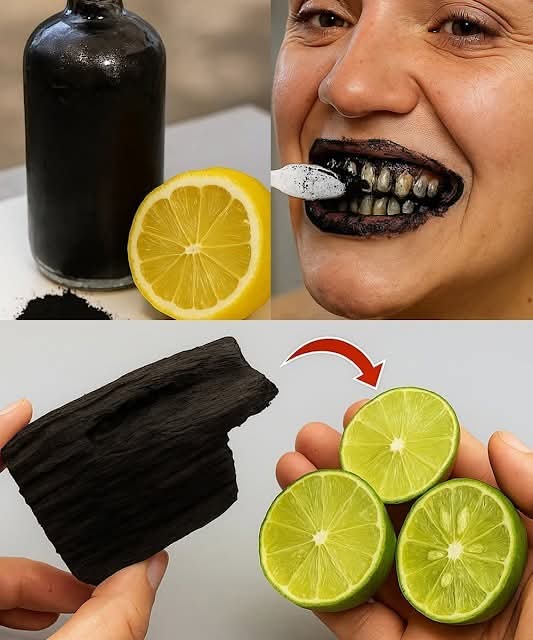
The Surprising Uses of Lemon and Charcoal: What This Popular Natural Mix Can Really Do
Lemon and charcoal have recently become a popular combination in natural beauty and wellness routines. Across social media, people have shared recipes claiming that mixing the two can whiten teeth, remove stains, cleanse the skin, improve digestion, and even eliminate toxins from the body.
The combination certainly looks convincing. The bright acidity of lemon paired with the deep black color of charcoal gives the mixture an appearance that feels powerful and “natural.”
But there is an important difference between something being popular online and something being scientifically proven to be safe and effective.
Before using lemon and charcoal on your teeth, skin, or taking charcoal internally, it is worth understanding what these ingredients can actually do—and where they may cause harm.
What Is Activated Charcoal?
Activated charcoal is a specially processed form of carbon. It has a highly porous structure, which allows certain substances to attach to its surface.
This property gives activated charcoal a legitimate medical use in specific poisoning situations, where healthcare professionals may administer it to help reduce absorption of certain substances from the digestive tract.
However, this does not mean that activated charcoal is a general detox treatment.
The body already has its own systems for processing and eliminating waste, including the liver, kidneys, lungs, and digestive system.
Taking charcoal every day is therefore not a necessary way to “clean” the body.
What Does Lemon Actually Provide?
Lemon is much simpler.
It contains vitamin C and citric acid and can be a useful addition to a healthy diet. Adding lemon juice to water, vegetables, salads, fish, sauces, or marinades can improve flavor while contributing a small amount of vitamin C.
Lemon water can also be useful simply because some people find it easier to drink more water when it has a pleasant flavor.
But adding charcoal does not automatically transform lemon water into a detox drink.
The Popular Teeth-Whitening Trend
One of the most common uses promoted online is brushing teeth with a mixture of lemon and charcoal.
This is where caution is especially important.
Charcoal may make the surface of teeth appear temporarily cleaner because its particles can interact with surface debris. But this is very different from actually bleaching the natural color of the tooth.
Lemon creates an additional concern.
Because lemon juice is highly acidic, frequent contact with teeth can soften and gradually erode tooth enamel.
Enamel is the hard protective outer layer of the tooth. Once it is significantly worn away, the body cannot simply grow it back.
This means that a homemade mixture that appears to make teeth look cleaner could potentially cause permanent damage if used repeatedly.
Why Can Teeth Look More Yellow After Enamel Damage?
There is an interesting detail that many people don’t realize.
Underneath the enamel is a naturally yellowish layer called dentin.
When enamel becomes thinner, more of the underlying dentin can become visible. As a result, someone who repeatedly uses acidic substances on their teeth may eventually notice that the teeth look more yellow, not whiter.
So a temporary improvement in appearance can come at the cost of long-term dental health.
For this reason, lemon and charcoal should not be used as a homemade teeth-whitening treatment.
A safer approach is regular brushing with fluoride toothpaste, cleaning between the teeth, and consulting a dentist if discoloration persists.
What About Using Lemon and Charcoal on the Skin?
Charcoal is sometimes included in commercially formulated cleansers and masks because activated charcoal can adsorb certain substances on its surface.
But that doesn’t mean that mixing charcoal powder with lemon juice at home creates a better skincare treatment.
Lemon juice can irritate the skin, particularly when applied directly and without proper formulation.
There is another concern that is even more important: citrus juice on the skin can increase sensitivity to sunlight.
In some circumstances, exposure to sunlight after citrus juice has been applied to the skin can trigger a reaction known as phytophotodermatitis.
This can cause redness, irritation, blistering, and dark discoloration.
Therefore, rubbing fresh lemon juice directly onto the face to remove dark spots or brighten the complexion is not a good substitute for properly formulated skincare products.
Can Lemon and Charcoal “Detox” the Body?
Another claim frequently seen online is that drinking charcoal mixed with lemon can remove toxins from the blood or cleanse the digestive system.
There is no need for such a daily detox drink.
Your liver and kidneys already perform essential functions involved in processing and eliminating substances from the body.
Activated charcoal also doesn’t absorb every toxin.
In fact, its medical use is limited to particular situations and substances. It is not appropriate for every type of poisoning.
If someone has swallowed a potentially dangerous substance, trying a homemade charcoal-and-lemon drink is not an appropriate response. Medical professionals should be contacted instead.
Continue reading on the next page