
[adinserter block=”3″]
Bayezid’s parents reportedly spent significant amounts of money seeking medical help.
They also tried different forms of treatment because they desperately wanted their son to improve.
His mother, Tripti Khatun, was reportedly a teenager when she gave birth to him.
In interviews, the family expressed fear about his future and uncertainty about whether doctors would be able to help him.
For parents, having a child with an extremely rare disorder can be overwhelming.
There may be few specialists, little information, limited treatment options, and enormous emotional pressure.
The “Benjamin Button” Comparison
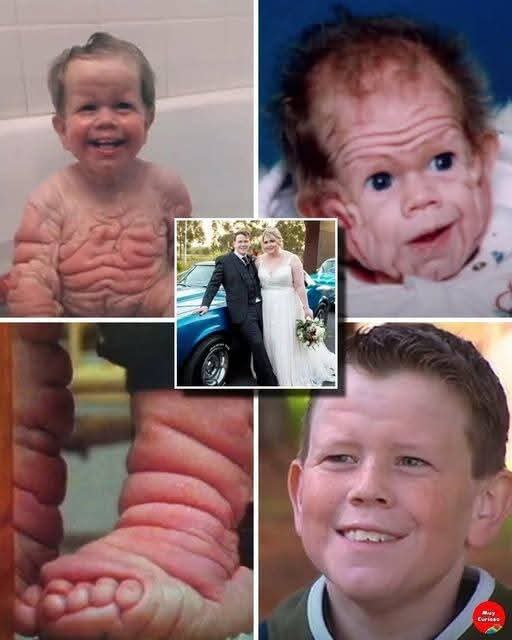
Because Bayezid appeared much older than his actual age, media stories frequently compared him with the fictional character Benjamin Button.
In the famous story, Benjamin Button is born looking like an elderly man and becomes younger as he grows older.
But real medical conditions do not work that way.
Bayezid was not literally aging backward or living through the fictional process described in the movie.
The comparison was simply a way for newspapers and social-media users to describe the striking contrast between his young age and his appearance.
His Mind Was Still That of a Child
One of the most important points in reports about Bayezid was that his physical appearance did not mean that he had the mind of an elderly person.
He was still a child.
He enjoyed playing and interacting with people.
His unusual appearance did not erase his childhood.
This is an important lesson when discussing rare medical conditions.
A person’s appearance tells us very little about their personality, intelligence, emotions, or abilities.
Why His Story Captured Global Attention
Photographs are powerful.
A single photograph of Bayezid could immediately communicate something that was difficult to explain in words.
People saw a small child with features that seemed dramatically different from those of other children.
The images were shared across newspapers, television programs, websites, and social media.
But the viral nature of the story also created a problem.
The more the photographs were shared, the more exaggerated some descriptions became.
Claims about his exact diagnosis, life expectancy, and rate of aging were sometimes repeated without sufficient medical context.
Rare Conditions Are Often Misunderstood
Rare diseases can be difficult to diagnose.
Doctors may need genetic testing, imaging, blood tests, physical examinations, and consultations with specialists.
In countries where access to specialized genetic medicine is limited, diagnosis can be particularly challenging.
That was one reason Bayezid was evaluated by specialists at Dhaka Medical College Hospital.
[adinserter block=”4″]
Doctors wanted to understand exactly what was causing his symptoms before determining what could be done.
His Story Is About More Than Appearance
When people saw Bayezid’s photographs, the first thing they noticed was his face and skin.
But his story also raises broader questions about how society treats people who look different.
A rare medical condition can change the way strangers behave.
People may stare.
They may ask inappropriate questions.
Children may become frightened because they have never seen someone with the condition before.
But education can change those reactions.
Once people understand that an unusual appearance may simply be the result of a medical condition, fear and misunderstanding can be replaced by compassion.
The Importance of Medical Accuracy
There is another lesson in Bayezid’s story: medical information should be handled carefully.
Internet articles sometimes use phrases such as “ages eight times faster” because they make the story more dramatic.
But rare genetic diseases are complicated.
Progeria does not mean that every organ literally ages eight times faster.
And not every child with loose or wrinkled skin has progeria.
That is why diagnosis should come from qualified medical professionals rather than photographs or social-media comparisons.
A Child Deserves to Be Seen as a Child
Perhaps the most touching part of Bayezid’s story is also the simplest.
Behind the unusual photographs was a child who wanted to play, laugh, explore, and experience life.
His appearance may have been extraordinary, but his basic needs were not.
He needed affection.
He needed friendship.
He needed medical care.
And most importantly, he needed to be treated with dignity.
A Story That Made People Look Twice
Bayezid’s photographs made millions of people stop scrolling.
They made people ask questions.
How could a child look so old?
What condition could cause this?
Could doctors help him?
But once the initial shock disappears, the story becomes something deeper.
It becomes a reminder that the human body can be affected by extremely rare genetic disorders—and that people living with those conditions deserve understanding rather than fear.
The Real Meaning Behind His Story
Bayezid Hossain’s story was never simply about a child who looked older than his age.
It was about a family trying to understand a rare medical condition.
It was about doctors searching for answers.
It was about a child growing up under the attention of strangers.
And it was about the importance of seeing the person behind the condition.
His photographs may be unforgettable because of his unusual appearance.
But the most meaningful lesson is not about how old he looked.
It is about how easily society can judge someone by their appearance—and how important it is to look beyond the surface.
A rare condition can change the way someone looks.
It should never change the value we place on their life.
[adinserter block=”5″]