
[adinserter block=”3″]
The Boy Who Seemed to Age Before His Time: The Remarkable Story of Bayezid Hossain
When Bayezid Hossain was born in Bangladesh, his parents immediately realized that something about their newborn son was very different.
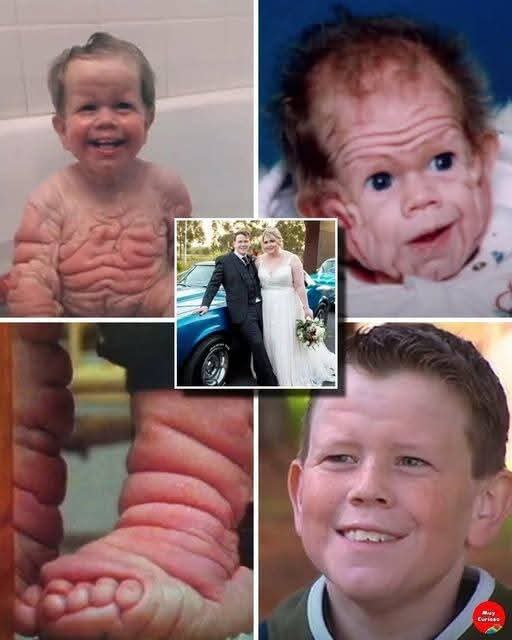
His appearance was unusual, with loose and wrinkled skin, prominent facial features, and an appearance that seemed far older than his actual age.
As he grew older, photographs of Bayezid began attracting international attention.
People who saw him for the first time sometimes assumed that they were looking at an elderly man.
But Bayezid was a child.
His story became known around the world because of the rare medical condition that doctors believed was responsible for his unusual appearance.
A Baby Who Looked Different
Bayezid was born in Bangladesh in 2012.
According to reports published when he was four years old, his parents were shocked by his appearance at birth. They said that doctors initially did not know exactly what was happening because they had rarely, if ever, encountered a child with similar features.
As Bayezid grew, his parents noticed that his skin remained unusually loose and wrinkled.
His face also developed characteristics that made him appear much older than his true age.
By the time he was four, photographs showed a child with sagging skin, hollow-looking eyes, and other physical features associated with premature aging.
Doctors Investigated His Condition
In August 2016, Bayezid was admitted to Dhaka Medical College Hospital for further evaluation.
Doctors formed a medical board to investigate his condition and planned numerous tests before deciding on appropriate treatment. Contemporary reporting said that he had previously been diagnosed with progeria by doctors in Magura.
His reported symptoms included wrinkled and sagging skin, joint pain, dental problems, and other physical characteristics that resembled accelerated aging.
However, the medical situation was more complicated than simply saying that Bayezid was “aging eight times faster.”
Some reports also associated his appearance with cutis laxa, a group of connective-tissue disorders characterized by loose, inelastic skin.
What Is Progeria?
Progeria, formally known as Hutchinson-Gilford progeria syndrome, is an extremely rare genetic disorder.
Children with classic progeria generally appear healthy at birth but develop characteristic features of premature aging during early childhood.
These can include:
– Slow growth
– Loss of body fat
– Hair loss
– Thin or wrinkled skin
– Prominent veins
– Joint problems
– Characteristic facial features
– Cardiovascular complications
[adinserter block=”4″]
Importantly, progeria does not mean that every part of the child’s body literally ages at the same rate as an elderly person’s body.
It is a specific genetic disorder with a characteristic medical course.
What Is Cutis Laxa?
Cutis laxa is different from progeria.
It refers to a group of disorders affecting connective tissue, in which the skin can become unusually loose, sagging, and lacking in elasticity.
The condition can vary considerably from one person to another.
Some forms primarily affect the skin, while others can involve internal organs and other connective tissues.
This is why identifying the exact diagnosis is important.
A photograph alone cannot distinguish between different rare genetic disorders.
The Child Behind the Photographs
The most important part of Bayezid’s story is easy to lose when photographs are shared online.
People often focused on how unusual he looked.
But reports also described him as a playful and intelligent child.
His physical appearance did not define his personality.
His family wanted him to have the opportunity to live as normally as possible despite the challenges created by his condition.
Life Was Not Easy
Bayezid’s appearance attracted attention from people in his community.
According to reports, some children were frightened by his appearance, making it difficult for him to attend a regular school. His family said that people sometimes stared at him because they did not understand his condition.
This created another challenge beyond the medical problems themselves.
For children with rare conditions, social isolation can sometimes be as difficult as the physical symptoms.
Instead of being treated simply as another child, they may constantly be reminded that they look different.
His Parents Were Worried About His Future
[adinserter block=”5″]
Continue reading on the next page