
[adinserter block=”3″]
Financial assistance, however, could not undo what had happened.
Six families had lost daughters, mothers, sisters, and loved ones.
The Children Left Behind
The consequences of the tragedy continued long after the flames were extinguished.
Some of the victims left children behind.
A later report described the child of one victim growing up knowing his mother largely through photographs and family memories. Her family maintained a small memorial in her home, keeping her photograph as a way of preserving her presence in their lives.
This is one of the less visible consequences of workplace disasters.
The headlines eventually disappear.
The damaged building is repaired or replaced.
The investigation ends.
But families continue living with the loss.
Children grow up without a parent.
Parents grow old without their daughters.
And anniversaries can bring the pain back all over again.
The Photograph Circulating Online
There is another important detail about the image frequently shared with stories about this tragedy.
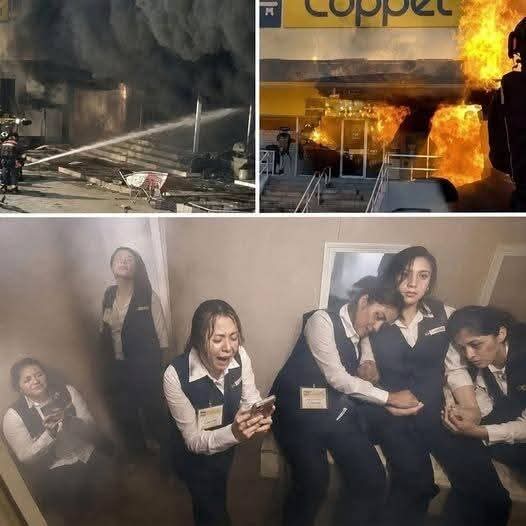
Some versions of the story use an emotional photograph showing six female employees sitting inside a smoky room while appearing to struggle during a fire.
That image should not automatically be treated as an authentic photograph taken during the 2010 disaster.
[adinserter block=”4″]
Fact-checking reports have identified versions of such imagery as a reenactment or later representation, rather than a photograph documenting the actual moment of the women’s deaths.
This distinction matters.
The real tragedy is already documented by contemporary reporting. There is no need to present a reenactment as if it were an actual photograph from inside the burning store.
A Tragedy That Raised a Larger Issue
The Coppel fire became a powerful example of why emergency preparedness matters.
A workplace may appear perfectly normal during ordinary business hours. Employees may enter the building every day without thinking about how they would escape during an emergency.
But when a fire begins, every second matters.
Doors that are normally convenient can become barriers.
Smoke can make familiar rooms impossible to navigate.
Electricity can fail.
Visibility can disappear.
And a building that seems safe under normal circumstances can become extremely dangerous within minutes.
That is why emergency exits must remain accessible, evacuation plans must be understood by employees, and fire-safety regulations must be taken seriously.
Remembering the Six Women
The six women who died that night were more than names in a news report.
They were daughters.
They were mothers.
They were sisters.
They were friends and coworkers.
They had families waiting for them.
They went to work expecting to return home.
Instead, their deaths became one of the most painful workplace tragedies associated with Culiacán in that period.
The years have passed, but the questions raised by the fire remain important.
Could better safety measures have prevented the tragedy?
Could accessible emergency exits have changed the outcome?
Could the rescue have happened sooner if firefighters had known immediately that workers were trapped inside?
These are not merely historical questions. They are reminders that workplace safety rules exist for a reason.
A Legacy of Questions and Remembrance
The Coppel Hidalgo fire was not simply a story about flames consuming a building.
It was a tragedy involving human lives, workplace conditions, emergency preparedness, and the responsibilities that come with protecting employees.
The six women went to work that evening expecting an ordinary shift.
Their families expected them home.
Instead, the night ended in unimaginable grief.
Years later, remembering the victims means remembering more than how they died. It means remembering that every worker deserves a workplace where safety is treated as seriously as productivity—and where, if disaster strikes, there is always a clear and accessible way out.
Their story remains a painful reminder of what can happen when emergency preparedness fails, and why no workplace should ever compromise the ability of its employees to escape when their lives depend on it.
[adinserter block=”5″]