
[adinserter block=”3″]
The Coppel Fire: The Tragic Story of Six Women Trapped Inside a Department Store
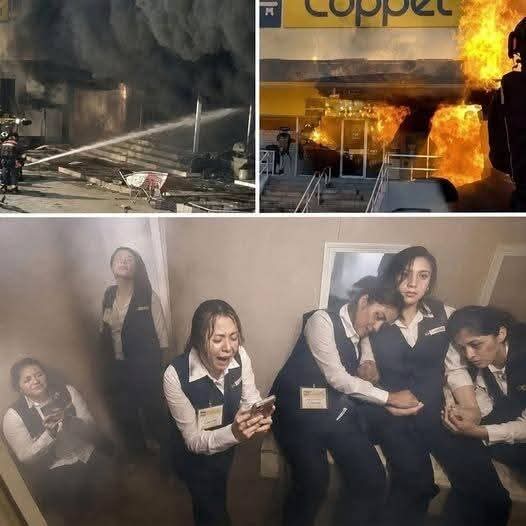
On a November night in 2010, an ordinary work shift at a department store in Culiacán, Sinaloa, Mexico, turned into a devastating tragedy.
Six women were inside the Coppel Hidalgo store, working on an inventory late at night. Within hours, the building would be consumed by fire, and none of the six workers would make it out alive.
The tragedy became widely known because of disturbing reports that the women had been unable to escape after the store’s access points were secured from the outside. The disaster also raised serious questions about workplace safety, emergency exits, fire prevention, and the responsibility of both the company and public authorities.
A Normal Night at Work
The six employees were reportedly carrying out inventory work after normal business hours.
The women were identified in contemporary reports as Ariana López Soto, Carmen Selene Moreno Zazueta, Verónica Picos Bastidas, Claudia Yaneth Bernal Delgado, Rosa Imelda Félix Gamboa, and Perla Zapata. Some later records contain variations in the spelling of several names.
They were working on the upper floor of the Coppel Hidalgo branch in downtown Culiacán.
At approximately 10 p.m., a fire broke out inside the building. Early reports indicated that an electrical short circuit was suspected as the cause, although the investigation focused on establishing the exact circumstances surrounding the disaster.
At first, the situation may have appeared like a conventional commercial-building fire.
But there was a critical problem.
The women were still inside.
The Fire Spread Rapidly
According to reports from the time, the fire spread through materials including furniture, clothing, plastic goods, and other merchandise.
The intensity of the flames made it extremely difficult for firefighters to enter the building.
Firefighters from Culiacán, Navolato, and Guamúchil were eventually involved in the emergency response. More than 80 firefighters and emergency personnel participated, and at least 15 firefighters were reportedly affected by smoke inhalation.
The operation continued for many hours.
The fire was not simply a small blaze that could be quickly extinguished. The building presented significant obstacles to the rescue effort.
The Doors Became a Central Question
Perhaps the most disturbing aspect of the tragedy was what investigators and witnesses said about the store’s entrances.
Contemporary reports stated that the store’s access points were closed with metal shutters and padlocks. Firefighters initially did not know that workers were still inside the building.
According to reports, rescuers attempted to break through the barriers but struggled to gain access. Eventually, firefighters had to create openings to enter the structure.
This detail became central to the investigation.
If people were inside the building, why were the access points secured?
Were there adequate emergency exits?
Were the workers aware of a safe evacuation route?
And who was responsible for ensuring that employees could escape in an emergency?
These questions would remain at the center of the controversy surrounding the case.
One Family’s Desperate Phone Call
Among the most heartbreaking details reported after the fire was the story of Ariana López Soto.
According to El Universal, Ariana was able to communicate with her family by telephone while the fire was burning around the building.
Her father and other family members remained outside, desperately waiting for rescuers to reach her.
The report described how Ariana’s voice became increasingly distressed as the situation deteriorated. She reportedly said goodbye to her mother and sisters before the telephone connection ended.
For the families outside the building, the experience was almost unimaginable.
They could see the fire.
They knew their loved ones were inside.
And they could not reach them.
The rescuers were fighting against the flames, smoke, heat, and locked access points.
Six Lives Were Lost
When firefighters finally gained access to the building, the six women were found dead.
Their deaths shocked Culiacán and attracted national attention in Mexico.
The tragedy was especially painful because the victims had not been participating in any dangerous activity. They had been doing routine work—taking inventory at their workplace.
Their families had expected them to come home after their shift.
Instead, they were left waiting outside a burning building.
Questions About Workplace Safety
The Coppel fire quickly became more than a story about a fire.
It became a case about workplace safety.
Reports raised concerns about the absence or inadequacy of emergency exits and the conditions under which employees were working during overnight inventory operations. A later report by the State Human Rights Commission of Sinaloa identified omissions and possible violations involving several government agencies in connection with the disaster.
The case also generated demands for accountability.
The question was not simply what caused the fire.
Investigators and families wanted to know whether the tragedy could have been prevented.
If the building had adequate emergency exits, accessible doors, functioning safety systems, and proper evacuation procedures, could the women have escaped?
Those questions became part of the public debate following the disaster.
The Investigation Continued
[adinserter block=”4″]
Authorities investigated the circumstances surrounding the fire, including the building’s safety conditions and the actions of those responsible for the store.
A year after the tragedy, La Jornada reported that prosecutors said there were indications that could support criminal proceedings against people for alleged omissions. The report also stated that authorities had identified irregularities involving doors, evacuation routes, and emergency exits at Coppel stores in the region.
The investigation therefore extended beyond the six victims and the immediate cause of the fire.
It raised a much larger question:
Who should be held responsible when workplace safety failures contribute to a deadly disaster?
Support for the Families
After the deaths, Coppel announced financial and other forms of support for the victims’ families.
Contemporary reports said the company agreed to provide compensation, housing assistance, educational support for children, medical insurance, and continued salary-related support for families.
The company also faced pressure from families, activists, and officials seeking answers about the circumstances surrounding the deaths.
[adinserter block=”5″]
Continue reading on the next page