
[adinserter block=”3″]
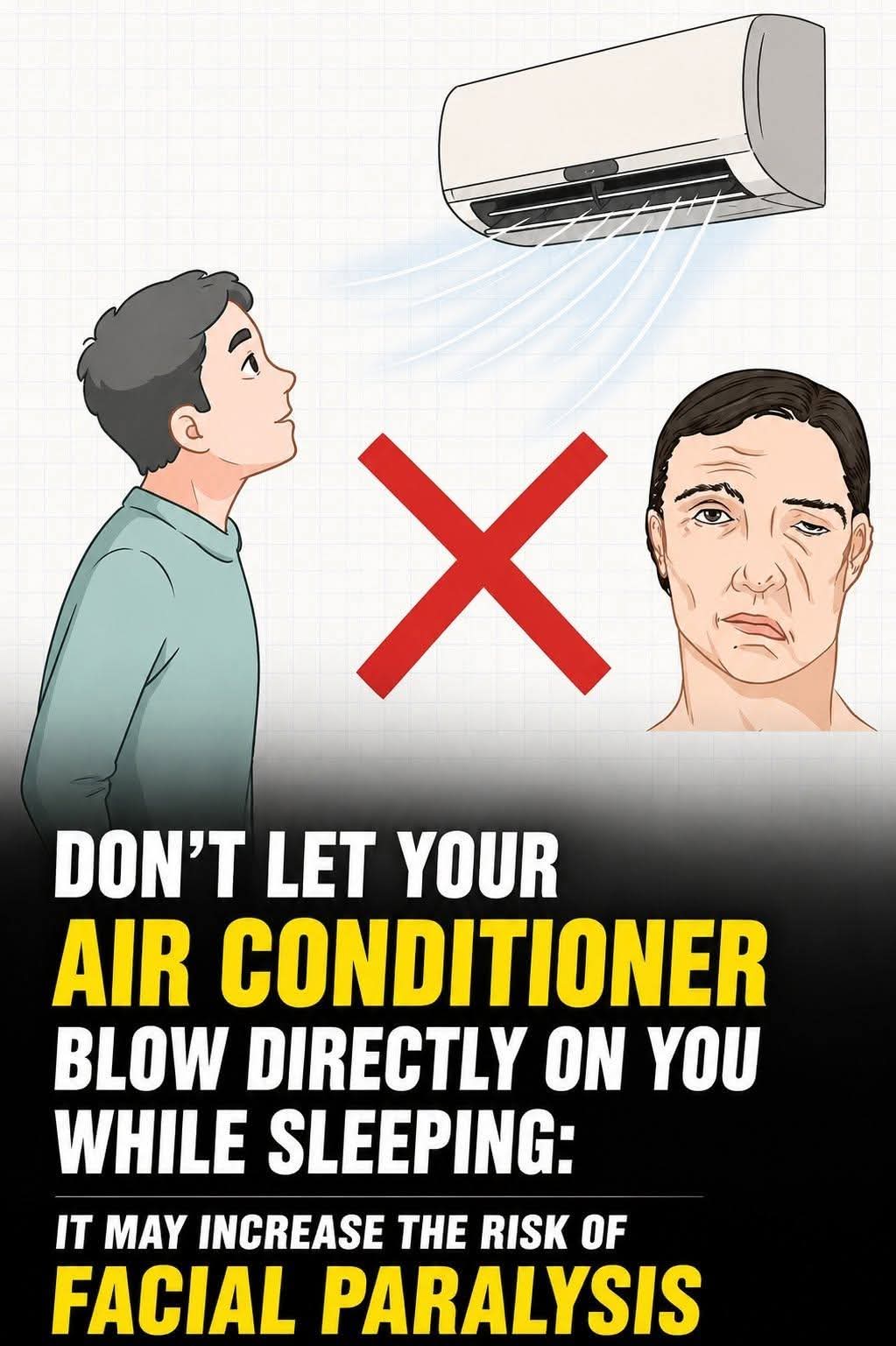
Sleeping with the air conditioner on can make hot nights much more comfortable, but where the cold air is directed matters. Many people enjoy positioning the airflow directly toward the bed, believing it helps them cool down faster. However, health experts recommend avoiding continuous cold air blowing directly onto your face or body throughout the night. While air conditioners do not directly cause facial paralysis, prolonged exposure to cold air may contribute to conditions that increase the likelihood of facial nerve irritation in some individuals.
One of the most well-known conditions associated with sudden facial weakness is Bell’s palsy, a temporary form of facial paralysis that usually affects only one side of the face. The exact cause is not always clear, but researchers believe it is often linked to inflammation of the facial nerve, frequently triggered by viral infections or an abnormal immune response. Factors such as stress, lack of sleep, fatigue, and exposure to cold environments may increase susceptibility in some people, although cold air alone is not considered the direct cause.
[adinserter block=”4″]
The facial nerve controls many everyday movements, including smiling, blinking, frowning, and closing the eyes. When this nerve becomes inflamed, symptoms can appear suddenly. A person may notice one side of the face drooping, difficulty smiling evenly, trouble closing one eye completely, increased tearing, drooling, changes in taste, or unusual sensitivity to sounds. Because these symptoms can also resemble those of a stroke, immediate medical evaluation is essential whenever sudden facial weakness develops.
Besides concerns about the facial nerve, sleeping under a constant stream of cold air can affect other parts of the body. Many people wake up with a stiff neck, sore shoulders, muscle cramps, headaches, dry eyes, nasal irritation, or a sore throat. Cold air can reduce moisture in the surrounding environment, leading to dryness of the skin, lips, and respiratory passages. People who already suffer from allergies, asthma, or sinus problems may notice that their symptoms become worse if the air conditioner is not properly maintained or if the room becomes excessively dry.
[adinserter block=”5″]
See more in the next page